
Cabinet Delivery Planning in Covington, GA
List delivery access and order questions to confirm directly with the seller.
Send my cabinet inquiry
Or call (562) 203-3232. Calls only, we do not receive text messages.
Two possible access routes at a property do not mean both are accepted for cabinet delivery. For Covington, Covington Cabinet Index follows a hypothetical buyer comparing an intended front handoff with another observed entry route. The task is to give the seller or carrier the facts it needs and identify where its actual service ends, instead of choosing a route from a general description.
- Independent buying guidance
- Product inquiries
- Seller availability confirmed separately
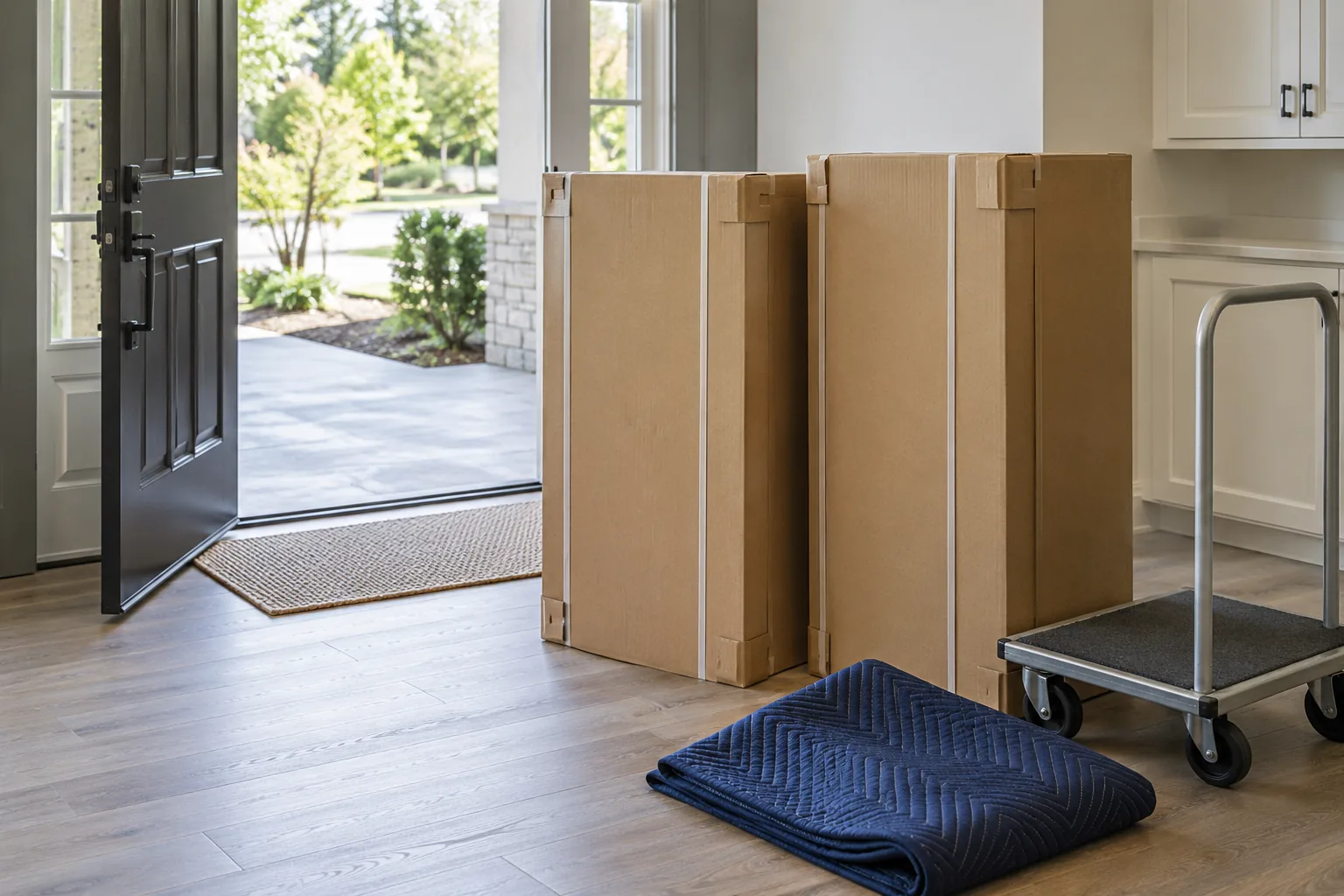
Buying questions: cabinet delivery and pickup planning
Use observations and shipment information for the actual order. The owner reviews inquiry records, while the Index does not assess vehicles, book handling, or guarantee access. Transport, unloading, carrying, receiving, and reporting responsibilities require acceptance by the relevant parties, with no road or housing stereotype inferred from the locality name.
About Covington Cabinet Index
Know who handles each part
Independent cabinet buying information and quote-request service. We do not manufacture, stock or install cabinets. A referral, supplier response, appointment or purchase is not guaranteed. Product availability, delivery and installation must be confirmed directly with the seller or separately engaged contractor.
Distinguish an observed route from an offered service
Describe each possible route to the intended handoff using recognizable property references. Record the facts the seller or carrier asks you to provide. A route visible to the buyer is a candidate to assess, not evidence that a delivery vehicle or crew accepts it. The actual service description must establish what is offered.
In the hypothetical purchase, the buyer prefers an alternate entry because it seems closer to the holding area. That preference does not show that the offered shipment can use it. Ask the responsible party what information it needs and what stopping point it is willing to confirm. Keep the preferred and accepted routes distinct.
Do not infer vehicle suitability from a passenger car visit or a photograph alone. Provide relevant actual dimensions or observations requested by the party making the assessment. The guide does not prescribe a universal access allowance. A specific accepted arrangement is more useful than a broadly reassuring route description.
Obtain the shipment details relevant to the route
Ask the seller for the actual carton or unit information and handling directions needed for the proposed goods. Assembled units and packaged parts can create different questions, but the product documents must explain the particular shipment. A finished kitchen image cannot establish transport or carrying requirements.
Identify whether the expected shipment is complete or phased under accepted terms. A route plan for a smaller proposed arrival should not automatically be reused for another load. Ask the seller what changes in contents or service need reassessment. Keep the current expected references with the route question.
If goods or format are substituted, revisit the relevant handling assumptions. A similar storage function can arrive in a different state. The buyer needs to know what is actually being moved and who accepts each task. The Index has no observed seller shipment dimensions or available equipment to supply in place of that evidence.

Name the handoff and the work after it
Ask where the carrier's accepted service stops and which unloading or carrying is included. A route to the property may differ from the route goods take after the agreed handoff. Keep those boundaries explicit. The buyer should not assume that access acceptance includes moving units into the intended room.
The hypothetical alternate entry may help independently arranged carrying after the carrier stops elsewhere. Ask the actual parties whether that sequence is accepted. A shorter-looking path does not provide labor or establish product suitability. Name who moves the goods and what instructions that person needs.
Identify the receiver and its actual responsibilities. Presence for paperwork is not automatically approval of substitutions or acceptance of every handling task. Give that person current shipment references, seller contacts, and the accepted stopping point. A route decision needs to survive the transition from planning discussion to arrival.
Prepare the actual arrival checks
Obtain the seller's reporting process for visible issues, missing goods, and later-discovered problems. Ask about required evidence, timing, and the reporting channel. The guide does not set a universal deadline or signature statement. The actual transaction documents must explain the relevant handoff.
Record observations using recognizable unit or carton references. A visible packaging issue should remain an observation rather than a conclusion about concealed goods. Ask how packaging and disputed pieces should be retained. The Index cannot promise that another route or handling choice produces a particular claim outcome.
For the hypothetical buyer, a changed stopping point should be reflected in the receiver's instructions before arrival. If a carrier cannot use the preferred route, resolve the remaining handling question with willing parties. Do not rely on the receiver improvising a service change or supplying labor that nobody accepted.

Cost estimates for the accepted access arrangement
No observed Covington route, freight, or carrying rates are supplied. Ask for estimates of the actual service offered, with the accepted stopping point and responsibilities identified. Obtain independently arranged handling pricing from its provider. A preferred route should not be assigned an assumed charge or saving.
Compare alternate arrangements the parties actually offer, preserving the same goods where possible. If service boundaries differ, show the remaining tasks. An unanswered unloading or transfer line is unknown rather than included. The complete intended arrangement may differ meaningfully even when two transport amounts look alike.
Access-arrangement estimates are subject to change with accepted shipment and handling conditions; the seller's written quote establishes its fulfillment scope and charge. Independent assistance requires separate documented terms. The Index cannot certify vehicle access, book a crew, or guarantee that a preferred entry reduces the complete purchase cost.
Keep accepted access separate from geographic context
The adopted Newton plan names Covington as a municipality and does not describe this property's routes. Use that source for locality identification only. Address conditions, seller acceptance, and any property permission question need their own actual evidence. An article's presence in a directory is not commercial coverage.
Reconcile the current quote, receiving plan, and route information before relying on the shipment. Identify what changed if the destination or goods were revised. Obtain confirmation for the actual arrangement instead of carrying a prior acceptance forward. Preserve the relevant party's answer with the version it concerns.
For owner review, describe Covington, the proposed routes, and the specific unaccepted task. The owner records the inquiry. Potential sharing needs consent and recipient willingness, without automatic logistics assignment. Actual supply, transport, and post-handoff work must be established through the parties accepting the defined responsibilities.
Inquiry process
From buying questions to a possible supplier quote
Sending an inquiry does not reserve products or book work.
Describe the purchase
Include project ZIP, room, approximate cabinet list and preferred timing.
Clarify requirements
Identify assembly, access, measurements and any separately arranged labor.
Confirm referral availability
An inquiry can be referred only if a suitable seller accepts the location and product request.
Review seller terms
Confirm the final drawing, itemized price, payment, delivery and return terms directly before ordering.
Illustrative product choices
Illustrative product visualizations, not completed work, local properties or supplier facilities.
Local buying information
Local inquiry guides
Questions
Cabinet Delivery and Pickup Planning: Common Questions
Does an available entry route prove the carrier can use it?
The responsible seller or carrier must assess the actual shipment and requested property information. Keep observed, preferred, and accepted routes distinct. A buyer's familiarity with the property does not establish a delivery service boundary or the handling included.
Can the carrier stop somewhere different from my holding area?
Ask what service it offers and identify who undertakes the remaining transfer. The intended goods may need another accepted handling arrangement after the carrier stops. A path alone does not provide labor or establish that a helper can move the actual shipment.
Should a product-format change reopen access questions?
Revisit the relevant shipment dimensions and handling information for the actual substituted goods. Similar storage function does not establish the same state of arrival. Ask the responsible parties which conditions their prior acceptance covered before reusing it.
Will the owner arrange a route assessment after submission?
The owner reviews the inquiry record without booking transport or a handling visit. Any possible introduction requires permission and independent willingness. Obtain actual access and work commitments from parties that accept the intended shipment and responsibilities.
Talk to us about cabinet delivery and pickup planning
Describe the purchase and project ZIP in Covington. Supplier acceptance and any referral are confirmed separately; no visit or quote is booked by this form.
Calls only, we do not receive text messages.